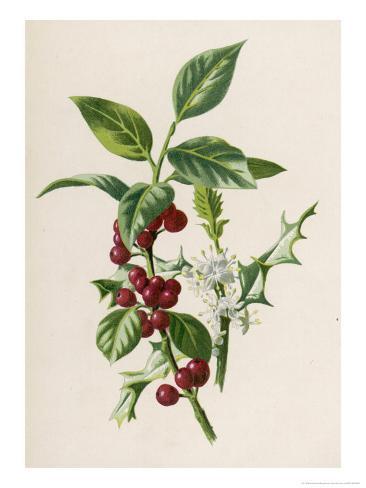
check out how this holly uses epigenetics to alter its leaves. the more its leaves are eaten, the more spiky the leaves become to protect from predation. the dna never changes but the plant can regulate gene expression by turning on or off different genes.
Showing posts with label news. Show all posts
Thursday, December 20, 2012
Wednesday, December 19, 2012
that's cheesy
no wonder why home made cheese taste so good. bacteria from skin is left behind when it's made. yum and gross all at the same time.
| ss illustrations and photography - sara samuelson |
Monday, December 17, 2012
look at these neat tiny biological creatures.
seeing the things we can't see can be amazing. thanks to microscopes, the beauty of these little worlds can be captured for everyone to see.
Mrs. Sahar Khodaverdi
University of Tabriz
|
Friday, December 14, 2012
too cute to be vemonus
well, this little guy is too cute. but his bite is worse than his bark. don't snuggle him!
| http://sync.democraticunderground.com |
Thursday, December 13, 2012
beetles in disguise
these neat looking beetles have a special partnership with ants. they have developed special adaptations which trick the ants into accepting them into the ant colony.
| http://research.kahaku.go.jp/zoology/hane/data/ILODA.html |
Wednesday, December 12, 2012
poop is always interesting (and funny)
for a similar reason why owl pellets are cool, so is poop. not only can scat (or feces) tell you what an animal has been eating but it can tell you what animal has been around. just like tracks, animals leave a little but of them selves behind as they navigate their environment. so, keep your eyes to the ground and watch out for that poop.
| http://forums.runnersworld.com |
Monday, December 10, 2012
not just for decorator crabs
every since i was little i have loved decorator crabs. from what i can recall, it started with a trip to the monterey bay aquarium. they had a tank of decorator crabs. these crabs were pretty crafty. in their tank were puff balls and googly eyes. because they didn't have coral, seaweed and other more traditional inter tidal flora and fauna, they decorated their carapace with puff balls and googly eyes. i still giggle just thinking about it.
well, it looks like decorating isn't just for crabs. check out this ancient lacewing larva.
i wonder if only creatures with exoskeletons decorate this way?
well, it looks like decorating isn't just for crabs. check out this ancient lacewing larva.
i wonder if only creatures with exoskeletons decorate this way?
An artist's conception of the fossilized lacewing larvae
with the beginnings of its trash packet.
Illustration courtesy J.A. Peñas, PNAS
|
| http://jamesfreed.com |
Thursday, December 6, 2012
Wednesday, December 5, 2012
do hippie birds prefer american spirits?
next thing you know these birds will be drinking whiskey to cure a cold.
i love the way wildlife adapts to our urban areas. but i hope these birds don't get sick from the carcinogens and pesticides in those cigarettes.
City birds may use cigarettes as substitutes for fresh vegetation that drives away parasites.
MANFRED DANEGGER/NHPA/PHOTOSHOT
|
Monday, December 3, 2012
bowerbirds - one of my top 5 favorite birds
they are so neat! the build these elaborate structures, then decorate them. one (out of many) amazing thing is, these birds are building their bowers with forced perspective. these birds have some talent. definitely a bird to look into.
| blog.designsquish.com |
Friday, November 30, 2012
fungus among us
or more like in us if you are an insect or another arthropod. these Cordyceps are endoparasitoids and make their home inside arthropods. one particular fungus that invades a caterpillar is being investigated for its anti-inflammatory properties. also makes a very interesting illustration subject that you can see here.
| "Illustrated Vegetable Wasps and Plant Worms in Colour" (1997) |
Thursday, November 29, 2012
trees telling a story
most everyone knows you can tell how old a tree is by counting its rings, but those rings can tell you so much more. the study if the rings is called dendrochronology. there are several subdisciplines that study everything from ecology to archaeology by studying those rings. you can do your own sleuthing into the past here.
| image from climatepedia.org |
Wednesday, November 28, 2012
another reason ticks are creepy
i am not creeped out by many things, but ticks gives me the heebee jeebees and now i have another good reason to not snuggle up with them. not that i eat much meat, but they are icky and can cause many more problems beyond a meat allergy.
i would still draw one. as long as it was well preserved
Tuesday, November 27, 2012
animals make the best muses
engineering inspired by animals only makes sense. those animals got it right thanks to evolution.
| Image: Justin Jaworski |
Wednesday, November 21, 2012
check out this article. has a funny title, a slew of illustrations and it's about dinosaurs
it is always a challenge to create an illustration form something that does not exist. this article has many drawings and models that show a bit on how that process works.
| Untrunked and hypothetical trunked brachiosaurus, produced by Bill Munns. |
Monday, November 19, 2012
Friday, November 16, 2012
who needs sleep when there are meteor showers to see?
i probably will not be able to see them, but if you don't live in the land of perpetual cloudy skies (seattle, wa), then maybe you can enjoy these leonids between 12 am and 3 am on august 17th.
Photograph by Tony Hallas, Science Faction/Corbis
Thursday, November 15, 2012
crowd sourcing for bird identification. neat!
for all you tech savvy bird watchers, check out what cornell is doing and lend them a hand. science!
Wednesday, November 14, 2012
all those segments and legs
a, Live female I. plenipes with 662 legs (captured by Rob Marek). b,c, Scanning electron micrographs of male I. plenipes: b, mid-section, dorsal aspect of segments (note dense setation and micro-sculpturation of intersegmental cuticle); c, mid-section, ventral aspect of segments showing paired appendages on each diplo-segment. d, Close-up view of ozopore, the opening to the repugnatorial gland, and surface structure of cuticular projection on posterior margin of segment. e, Male copulatory device (gonopods), which are modified legs (ninth and tenth pair); left anterior is shaded blue; right posterior is in yellow. Scale bars: a, 10 mm; b, c, 400
Tuesday, November 13, 2012
Subscribe to:
Posts (Atom)